
PPC
|10 min read

Last updated on October 12, 2026
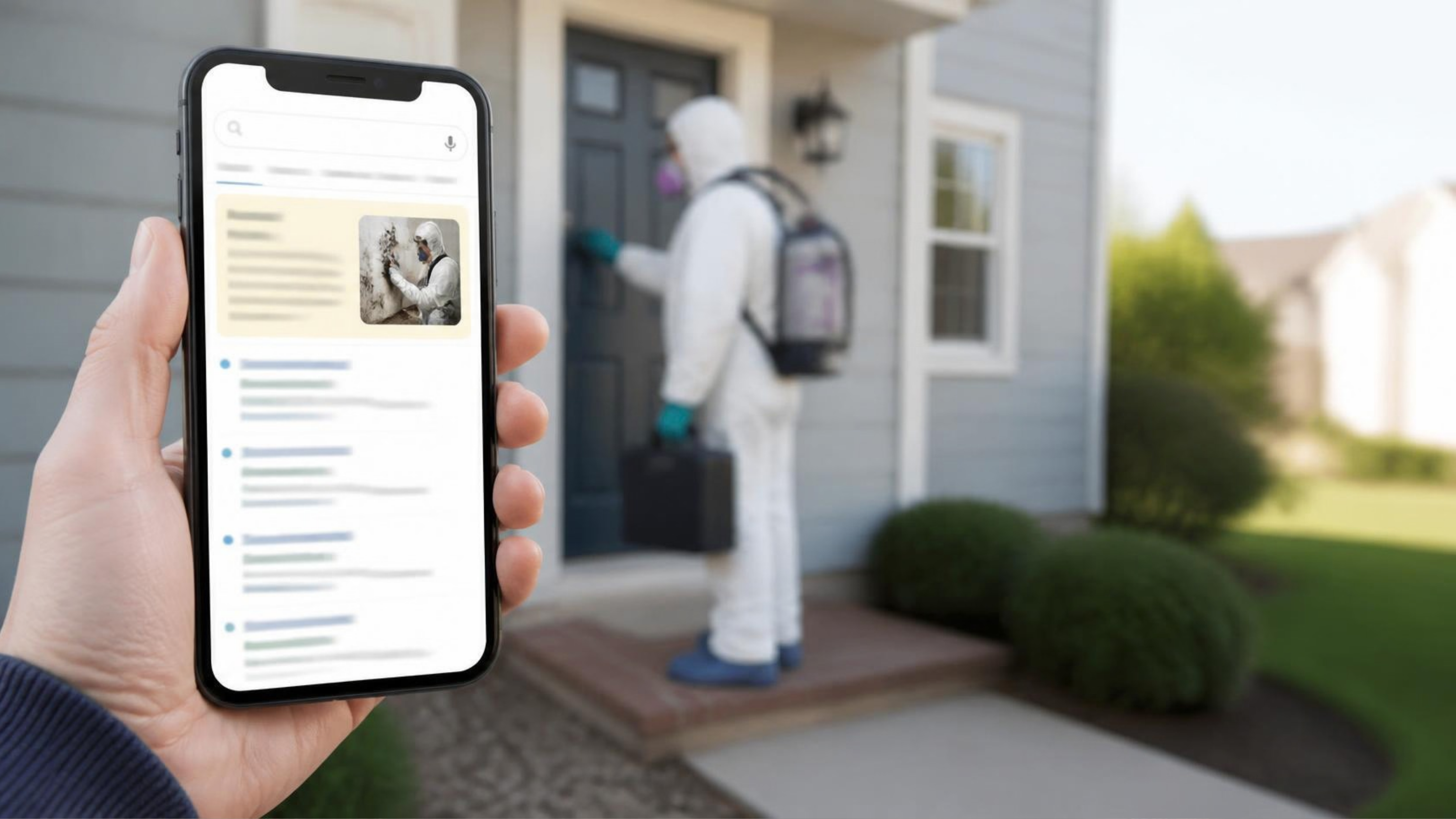
Google Ads can put your mold removal company in front of property owners when they are actively looking for help. It can also consume your budget with testing requests, DIY questions, tenant complaints, and calls from outside your service area.
The difference is not simply choosing better keywords. A profitable campaign connects search intent, geographic targeting, landing pages, lead response, and sales data.
If Google only knows that someone called, it will try to generate more calls. If it knows which callers booked an assessment and became customers, it can optimize toward qualified mold removal jobs.
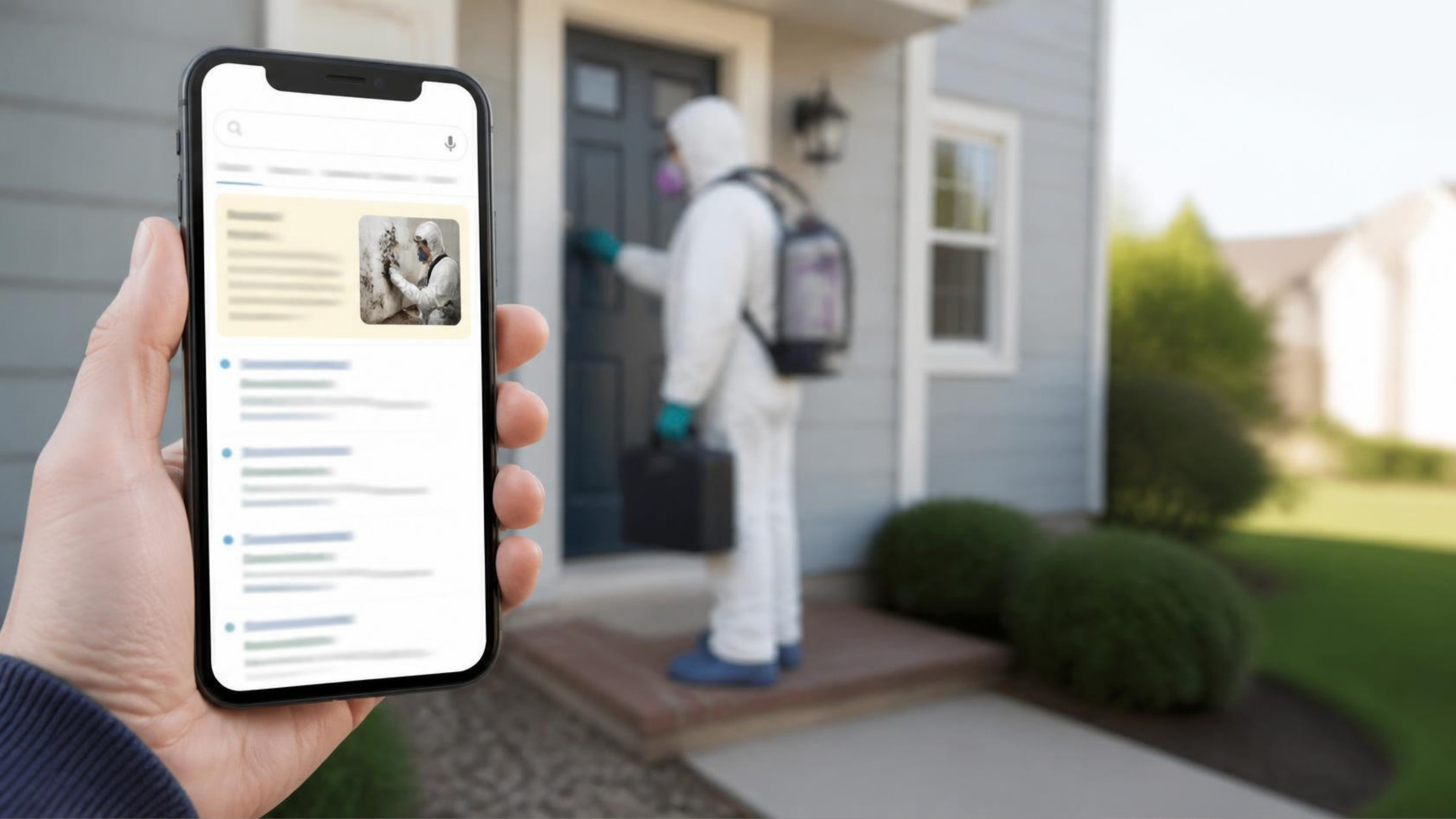
Mold removal searches can indicate a serious service need, but the word “mold” does not always signal intent to hire.
A person searching for mold may want professional remediation, standalone testing, cleaning instructions, health information, legal advice, or a product. Campaigns must separate customers looking for a contractor from those conducting informational or DIY searches.
Mold removal is also diagnostic. The property owner may not know the source of the moisture, how far the problem has spread, or whether testing is required. Ads should make the next step clear without making unsupported health, insurance, or permanent-removal guarantees.
The U.S. Environmental Protection Agency recommends addressing water damage within 24 to 48 hours as a mold-prevention measure. This gives companies a valid reason to emphasize a prompt response without relying on fear-based language.
Mold removal campaigns should be segmented by search intent, service type, location, and potential job value.
|
Campaign group |
Search intent |
Best destination |
|
Core remediation |
Mold removal near me, mold remediation company |
Main remediation landing page |
|
Urgent response |
Emergency mold removal, mold after water damage |
Fast-response page with prominent calling options |
|
Commercial |
Commercial mold remediation, apartment mold removal |
Commercial page covering containment and coordination |
|
Local service |
Mold removal in [city] |
Relevant service-area page |
|
Cost research |
Mold remediation cost, mold removal estimate |
Educational page explaining pricing variables |
|
Testing |
Mold inspection, mold testing company |
Separate testing page when the service is offered |
Someone searching for emergency mold removal should not receive the same message as someone researching remediation costs. The ad, landing page, and next step should reflect the searcher’s situation.
Testing should also be separated from remediation. If your company does not provide standalone testing, those searches should be excluded or addressed with clear qualification language.
Target only the areas your team can serve efficiently and profitably.
Google’s default targeting may include people outside your service area who have shown interest in the location. Google also explains that location targeting relies on several signals and is not always completely accurate.
Select people who are in or regularly in your target locations. Then compare Google’s geographic reports with the actual property addresses recorded in your CRM.
Do not evaluate a location by lead cost alone. A distant zip code may generate inexpensive calls but may become unprofitable after accounting for drive time, crew availability, mobilization costs, and average job size.
Strong keywords combine a specific service with clear intent to hire. Examples include:
These keywords should be refined using actual search and sales data.
Google’s search terms report shows the queries that generated campaign traffic. Review it regularly for searches related to:
Negative keywords should be based on the company’s actual services. For example, “insurance” may represent a valuable project for one remediation company and an unsupported customer expectation for another.
A strong mold removal ad should quickly explain:
Only use claims the company can verify. Do not advertise 24-hour response, insurance assistance, testing services, or certifications unless they are accurate.
The ad should lead to a relevant page instead of a general homepage. Effective landing pages built to convert should include:
Google recommends regularly evaluating landing-page and mobile performance. For urgent searches, the page must load quickly and make it easy to call from a mobile device.

A phone call or form submission is not the final result. Each inquiry should be tracked through the complete sales process:
Google supports tracking calls from ads and websites, but call duration alone does not prove quality. A long call may be outside the service area, while a short call may become a valuable project.
The campaign should connect to a CRM and lead-tracking system that records qualification, bookings, estimates, and sales.
Google’s enhanced conversions for leads can help connect offline outcomes with the original ad interaction. This allows Google to learn which ads generate customers rather than simply generate contacts.
Qualified leads and booked assessments may be stronger primary conversions than raw phone clicks or form submissions. The best conversion is the deepest outcome the company can report accurately and consistently.
There is no universal Google Ads budget for mold removal. The right amount depends on average project revenue, gross profit, close rate, local competition, and acceptable customer acquisition cost.
For example, assume your maximum acceptable customer acquisition cost is $800 and 20 percent of qualified leads become customers:
$800 × 20% = $160 maximum cost per qualified lead
If only 60 percent of initial inquiries qualify:
$160 × 60% = $96 maximum cost per inquiry
These numbers are examples, not industry benchmarks. Each company should use its own margins, qualification rate, and close rate.
The budget must also provide enough data to evaluate performance. If the expected qualified lead cost is $160, a $500 monthly budget is unlikely to yield a reliable sample. The company may need to increase the budget, reduce the service area, or begin with fewer campaign groups.
Clicks, impressions, and raw cost per lead can help diagnose campaign activity. They do not prove profitability.
Mold removal companies should prioritize:
A low cost per lead can be misleading if most inquiries are outside the service area or do not need remediation. A higher-cost lead may be more valuable if it becomes a larger, more profitable job.
Mold prospects may contact several providers, especially after a leak or water event. Campaign schedules and response promises should match the hours when someone is available to answer or follow up.
Every company should define:
When immediate human response is unavailable, automated lead follow-up can acknowledge the inquiry and collect basic information until the team takes over.
There isn't a universal number, and benchmarks from other companies won't tell you much about yours. Work backward from your own figures: the most you can spend to win a customer, your close rate, and how many inquiries actually qualify. A company with large commercial jobs can afford a much higher cost per lead than one doing mostly small residential cleanups.
Calls can start within days of launch, but the first month or two is mostly about learning. You're finding out which searches waste money, which locations are worth the drive, and which leads actually book. Expect to adjust keywords, negatives, and targeting several times before you judge the campaign on cost per job.
Yes. Build a separate campaign around commercial searches like "commercial mold remediation" and "apartment mold removal," and send that traffic to a page written for property managers. That page should cover containment, tenant coordination, documentation, and scheduling around occupied buildings. Mixing commercial and residential searches in one campaign makes it hard to tell which one is producing revenue.
Google Ads for mold removal should be measured by qualified opportunities, booked assessments, and profitable jobs, not clicks or raw lead volume.
The ad captures demand. The landing page establishes trust. The response process books the assessment. The CRM shows which campaigns produce revenue.
Rizen used this connected strategy to help BioSweep Southeast develop a more consistent source of mold remediation opportunities. The BioSweep Southeast case study shows how paid search, call tracking, website improvements, and broader marketing systems worked together.
If your campaigns generate leads but the revenue is difficult to trace, schedule a growth call to identify where the system is breaking and what to improve first.
These Stories on Roofers



No Comments Yet
Let us know what you think