
|11 min read

Last updated on July 23, 2026
Last updated on July 23, 2026
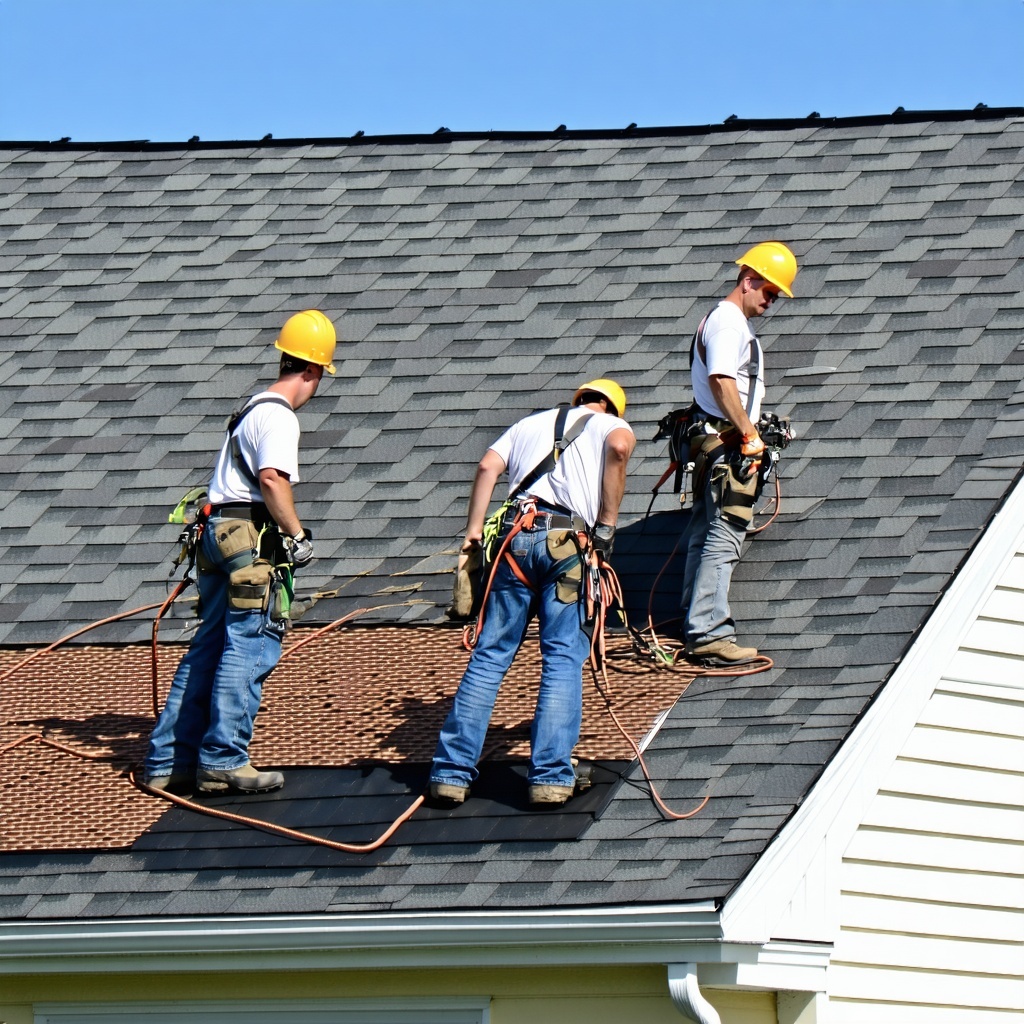
Your best rep closes 40% of the estimates he runs. Your newest rep closes 12% on the exact same leads, in the exact same neighborhoods, at the exact same prices. The difference is not talent: your best rep has a process in his head that nobody else on the team has ever seen written down. When he leaves, the process leaves with him.
This guide lays out that roofing sales process step by step: how to qualify a lead before you climb the roof, how to turn the inspection into the moment that actually sells the job, how to handle objections without discounting your way to a thin margin, how to close without being pushy, and how to follow up in a way that prevents cancellations instead of causing them. None of it depends on a specific customer relationship management (CRM) system or software platform. It is the process itself, the part that has to work, whether you are running it on a whiteboard or the most expensive tool on the market.
A sales process needs structure because talent alone does not scale past the person who has it. Your top performer likely does not follow a formal process on paper, but he does follow a consistent internal pattern: he qualifies before he pitches, he uses the inspection to build a case instead of just documenting damage, and he follows up before the homeowner has time to call a competitor. Writing that pattern down is what lets a second, third, and tenth rep repeat it.
Without structure, every hire is a bet that they will develop the same instincts on their own. With structure, you are training reps into a system that already works, which shortens ramp time and protects your close rate when your best rep is out sick, on vacation, or eventually moves on.
None of this works without a steady roofing sales pipeline feeding it. Roofing Marketing covers the channel mix that keeps leads coming so this process has something to run on.
A roofing sales process runs through five stages: qualifying, inspecting and presenting, proposing, closing, and following up. Each stage has a different goal, and skipping one to rush to the next is the most common reason estimates stall without a decision.
|
Stage |
Goal |
Typical timeframe |
|
1. Qualifying |
Confirm the lead is a real fit before you spend a truck roll on it |
Same day as lead intake |
|
2. Inspecting and presenting |
Build the case for the work while you're already on-site |
Same appointment |
|
3. Proposing and handling objections |
Present the investment and resolve trust, need, or money concerns |
Same appointment or within 24 hours |
|
4. Closing |
Get a clear yes, no, or specific next step |
Same appointment or first follow-up call |
|
5. Following up |
Confirm the sale, prevent cancellation, and set up the referral ask |
First 30 days after signing |
This table describes the process itself, not a CRM pipeline configuration. Whatever software you use, or none at all, these five stages are what actually determine whether an estimate turns into a signed job.
Qualifying means confirming the homeowner has a real need, the authority to decide, and a realistic budget range before you spend an hour on their roof. This kind of need-authority-budget check is a sales fundamental for a reason: a rep who asks these questions upfront can tell within minutes whether the appointment is worth the drive.
Skipping qualification not only wastes your rep's time. It also means the rep walks into the inspection without knowing what actually matters to this homeowner, which weakens everything that happens next.
The inspection is the sales presentation, not a separate step that happens before one. A rep who silently walks the roof and hands over a quote later has given the homeowner nothing to remember and nothing to feel urgency about. A rep who narrates what he's finding (this shingle is cupping here, this flashing is what's letting water in, this is what happens if it goes through another storm season) turns the inspection into the moment the homeowner actually decides they need the work done.
Photograph every issue you find and show the homeowner in real time, rather than saving photos for a report they'll see later. Homeowners commit to problems they can see, not problems they're told about after the fact.
Present the proposal in person, at the same appointment as the inspection, whenever possible, since a quote emailed later loses the urgency and trust you just built on the roof. Walk through the scope of work first, then the investment, then stop talking. The silence after the number is where most reps lose their nerve and start negotiating against themselves before the homeowner has even objected.
Every objection a homeowner raises falls into one of three categories:
|
Objection |
What's really being asked |
How to answer |
|
Trust |
Do I believe this company can do the job right? |
Proof: references, photos of past jobs, your license, and insurance |
|
Need |
Do I actually need this work done? |
Restate the inspection findings in plain terms |
|
Money |
Can I afford this? |
A different kind of answer entirely (financing, covered next) |
Figure out which category you're actually hearing before you respond, since answering a trust objection with a lower price does nothing to build the trust that was actually missing.
Offering financing gives homeowners a way to say yes without you cutting into your margin, which is a better answer to a money objection than a discount that trains customers to expect one. Have financing terms ready to present at the same appointment, rather than mentioning them only as an afterthought if the homeowner pushes back. Bringing it up proactively signals you expected the concern and already solved it.
Close by asking a direct, specific question once you've presented the proposal and addressed objections: "Does this work for you, or is there something still holding you back?" Avoid closing techniques built on pressure or artificial urgency, since a homeowner who feels pushed into a large purchase is more likely to cancel later or leave a bad review, even if they sign that day.
If the homeowner isn't ready to sign, get a specific next step and a specific time, not a vague "I'll think about it and call you." A rep who leaves without a scheduled follow-up has effectively lost the lead to whichever competitor calls back first.
Follow up within the first few days after signing to confirm the homeowner still feels good about the decision, since buyer's remorse on a large purchase is real, and a quick check-in can resolve it before it turns into a cancellation call. Speed matters at every stage of this process, not just the first contact.
The same follow-up sequence that prevents cancellations is also the right moment to set up the referral ask, since a homeowner who just had a good experience is far more likely to send you their neighbor than one who hasn't heard from you in three weeks. The Roofing Referral Program Guide covers how to build that ask into an automated system rather than relying on memory.
Train your team by making the process visible, not just talked about:
A rep who closes well by accident is harder to coach than one who closes well by following a process you can both see.
This is also where a CRM becomes useful, once you have more than a couple of reps and need visibility into who's following the process and who's skipping steps. A CRM enforces a process; it doesn't create one, so the process must exist first, regardless of which tool ultimately tracks it.
Qualifying happens first to confirm whether the lead is worth pursuing at all, while closing happens last and requires a clear decision once the homeowner already understands the problem and the proposal. Skipping qualification to rush toward a close is why so many estimates end in "let me think about it."
Most residential roofing sales close within a single appointment or within a few days of follow-up calls, since homeowners lose urgency quickly once the inspection is behind them. If your typical cycle stretches past a week or two without a clear reason (financing approval, insurance claim timing), that's usually a sign the follow-up stage needs work, not the pitch itself.
No, the process works on paper, or a spreadsheet for a small team, and the stages matter more than the tool tracking them. What Is the Best CRM for Roofers compares the leading options for when your team outgrows a spreadsheet.
Commercial sales involve a longer cycle, a different buyer (property managers and facility managers rather than homeowners), and a proposal built around building-lifecycle costs rather than emotional urgency. Commercial Roofing Companies covers the account-based approach that fits the buyer.
A tight sales process still needs somewhere to live once your team grows past a whiteboard or a spreadsheet. Rizen builds CRM pipelines around the real process covered here, not a generic template, so every stage from qualifying through follow-up is tracked, every lead routes to a rep automatically, and nothing slips through because someone forgot to log a note.
See how Rizen builds CRM pipelines around your actual sales process.
No Comments Yet
Let us know what you think