Pool service advertising covers every tactic you use to put your business in front of a homeowner who's actively considering a pool, from digital campaigns to the physical, in-person plays most competitors have stopped bothering with. This guide trims the usual 30-idea list down to the 15 that actually earn a spot on it, plus how to diagnose an ad that isn't working. It's one piece of a broader swimming pool marketing strategy.
At a glance:
Digital:
- Drone footage
- 360-degree virtual tours
- Makeover contests
- Live design sessions
- Podcast sponsorships
- Niche-platform ads
- Weather-responsive campaigns
- Renovation video series
Physical:
- Pool-shaped mailers
- Pop-up showcases
- Dive-in movie nights
- Floating billboards
- Decking samples in retail stores
- Care workshops
- Bus and bench ads
Why Do Most Pool Service Ads Fail?

Most pool service ads fail for one of three reasons: vague messaging, targeting that's too broad, or skipping digital channels in favor of whatever's always been done. Fix the first two before spending another dollar chasing the third.
The first is vague messaging. An ad that could belong to any pool company in the country, "quality service, fair prices, call today," gives a homeowner nothing to actually remember or act on. The ads that convert lead with something specific: a real project type, a real turnaround time, a real reason to pick this company over the next one in the search results.
The second is targeting that's too broad. An ad aimed at "everyone who might want a pool" spends money showing up in front of people who aren't close to ready, while the homeowner comparing quotes this week never sees it. Age, income, and location get you started, but the ads that actually convert also account for what's motivating the person, affordability and financing for a practical buyer, design and status for someone treating the pool as a statement piece. An ad written for everyone reads like it was written for no one.
The third is neglecting digital channels in favor of whatever's always worked. Referrals and word of mouth still matter, but a company with no real digital presence is invisible to the growing share of homeowners who search Google or scroll Instagram before they ever ask a neighbor for a recommendation.
What Are the Best Digital Advertising Ideas?
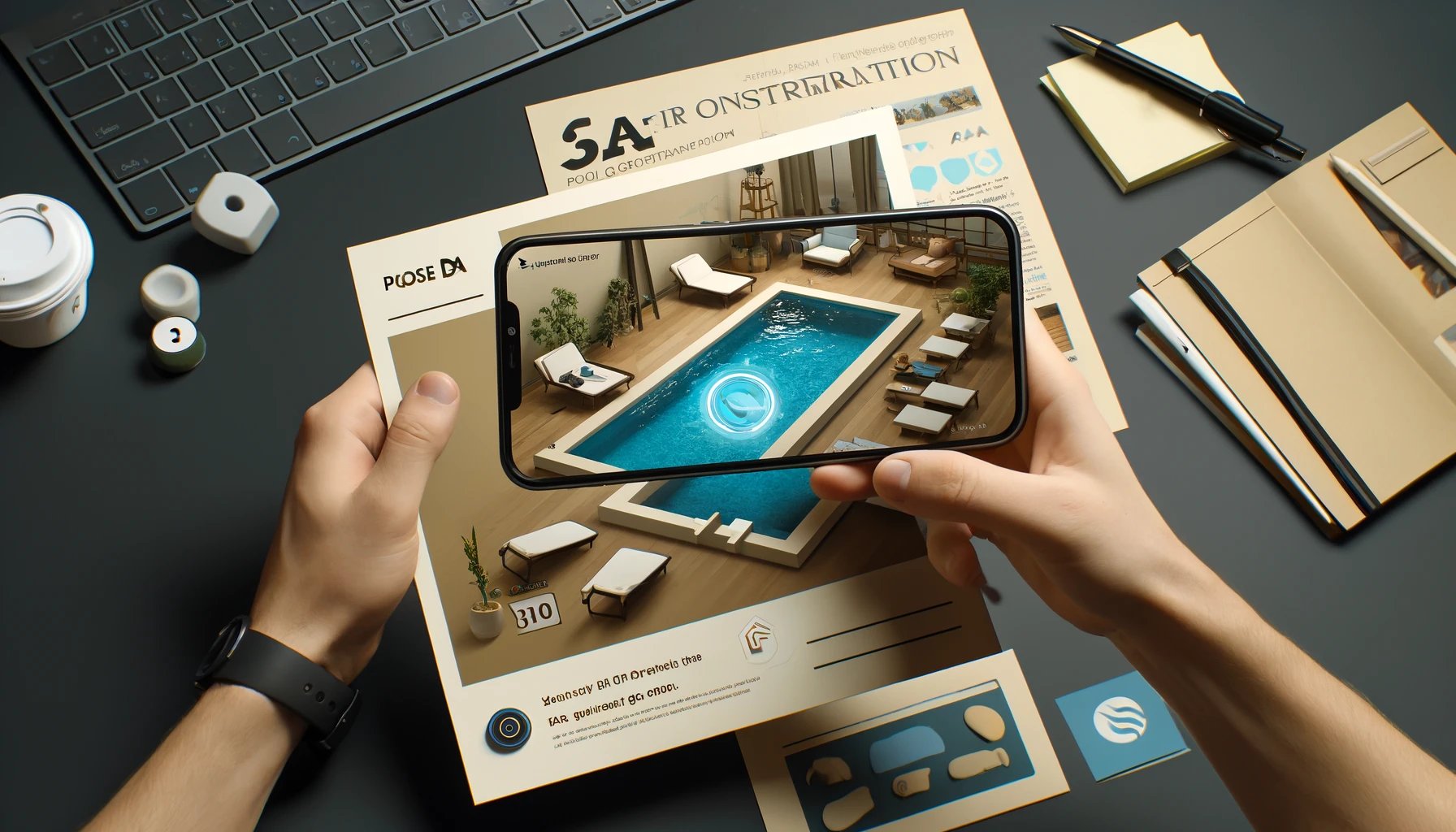
- Drone Footage for Visual Impact. High-resolution drone video shows off the scale and design of a finished pool in a way ground-level photos can't. Hire an FAA Part 107-certified operator, most work freelance for a few hundred dollars a shoot, and reuse the footage across your website, YouTube, and paid campaigns instead of treating it as a one-off expense.
- 360-Degree Virtual Pool Tours. Let prospects walk through a completed project themselves instead of scrolling static photos. A basic 360 camera and a free hosting tool (Google's own Street View app works for this) is enough to start; embed the tour directly on the project's page instead of linking off to a third-party site.
- Pool Makeover Contests. Invite homeowners to submit photos of a dated pool for a chance at a transformation, judged and announced publicly on social media. The submissions alone generate before-and-after content for months afterward, and the contest positions you as the renovation expert in your market well beyond the entry period.
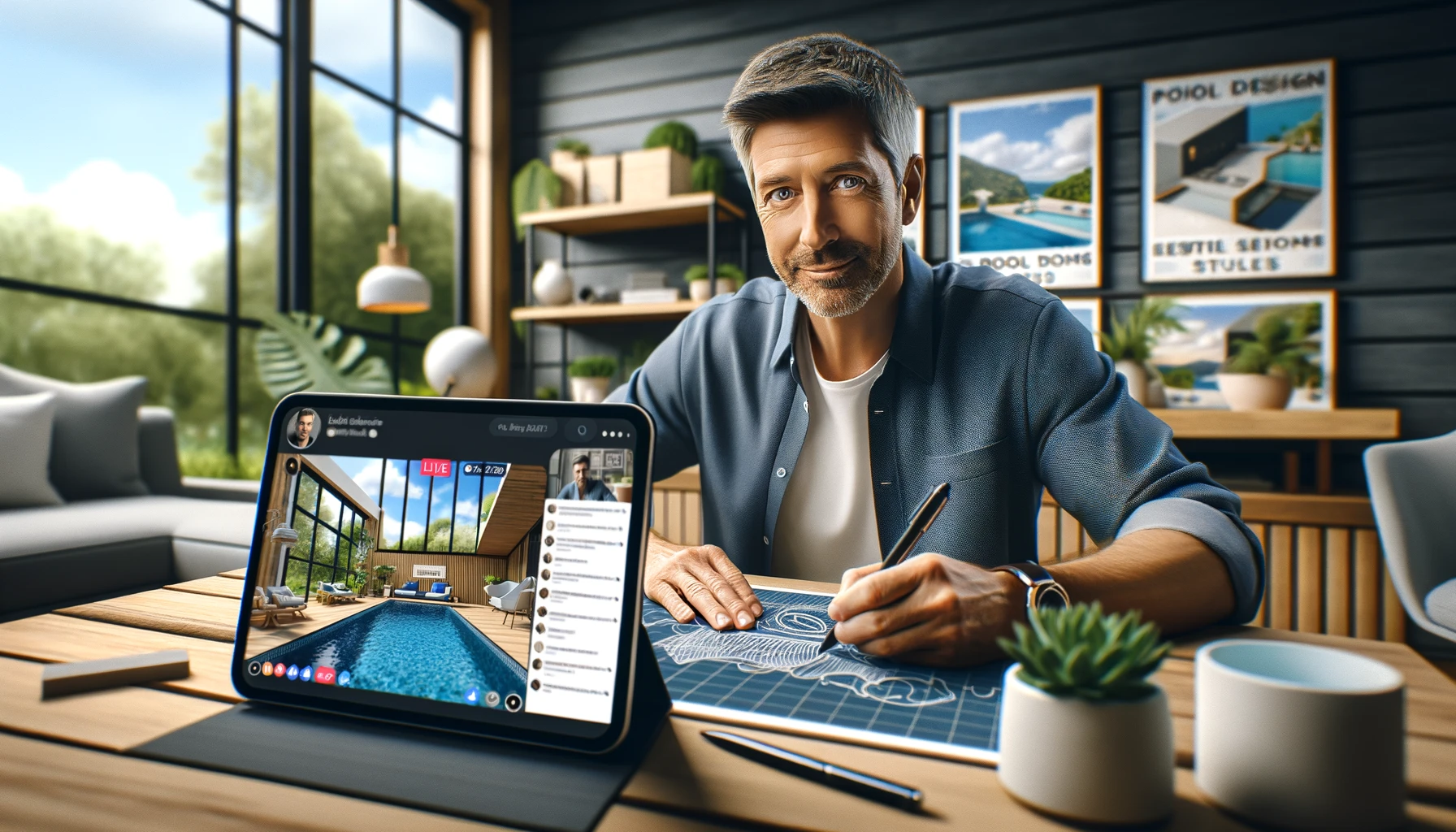
- Live Design Sessions on Social. Host a live session with a designer on Facebook or Instagram, sketching layouts and answering questions in real time. Announce it a few days ahead so people can submit their own backyard photos for feedback live; that's what turns a passive broadcast into something people actually show up for.
- Podcast Advertising on Home and Outdoor Shows. Sponsor episodes of home improvement or outdoor living podcasts, and push for a host-read spot over a pre-produced one; audiences trust a host's own words more than an obvious ad read verbatim. Frame the message around lifestyle, not just service, since that's the same reason someone's listening to the show in the first place.
- Targeted Campaigns on Niche Platforms. Run ads on Houzz and Nextdoor specifically, where the audience is already searching for home improvement inspiration and local service providers, not scrolling a generic feed. Both platforms let you target by neighborhood, which matters more here than broad demographic targeting does.
- Weather-Responsive Ad Campaigns. Trigger ads based on local weather: installation offers on the season's first hot day, maintenance discounts ahead of a forecasted cold front. Most ad platforms support geo and schedule targeting natively; you don't need a separate weather-data tool to pull this off, just the discipline to set the triggers up before the season starts.
- Pool Renovation Video Series. Document a real transformation from first consultation to finished pool in a short web series, three to five episodes, not a single highlight reel. It builds more trust than any single before-and-after photo, since homeowners see the actual process, the mess, the decisions, the timeline, not just the polished result.
What Physical Advertising Ideas Are Still Worth Trying?
These seven physical tactics are still worth the budget.
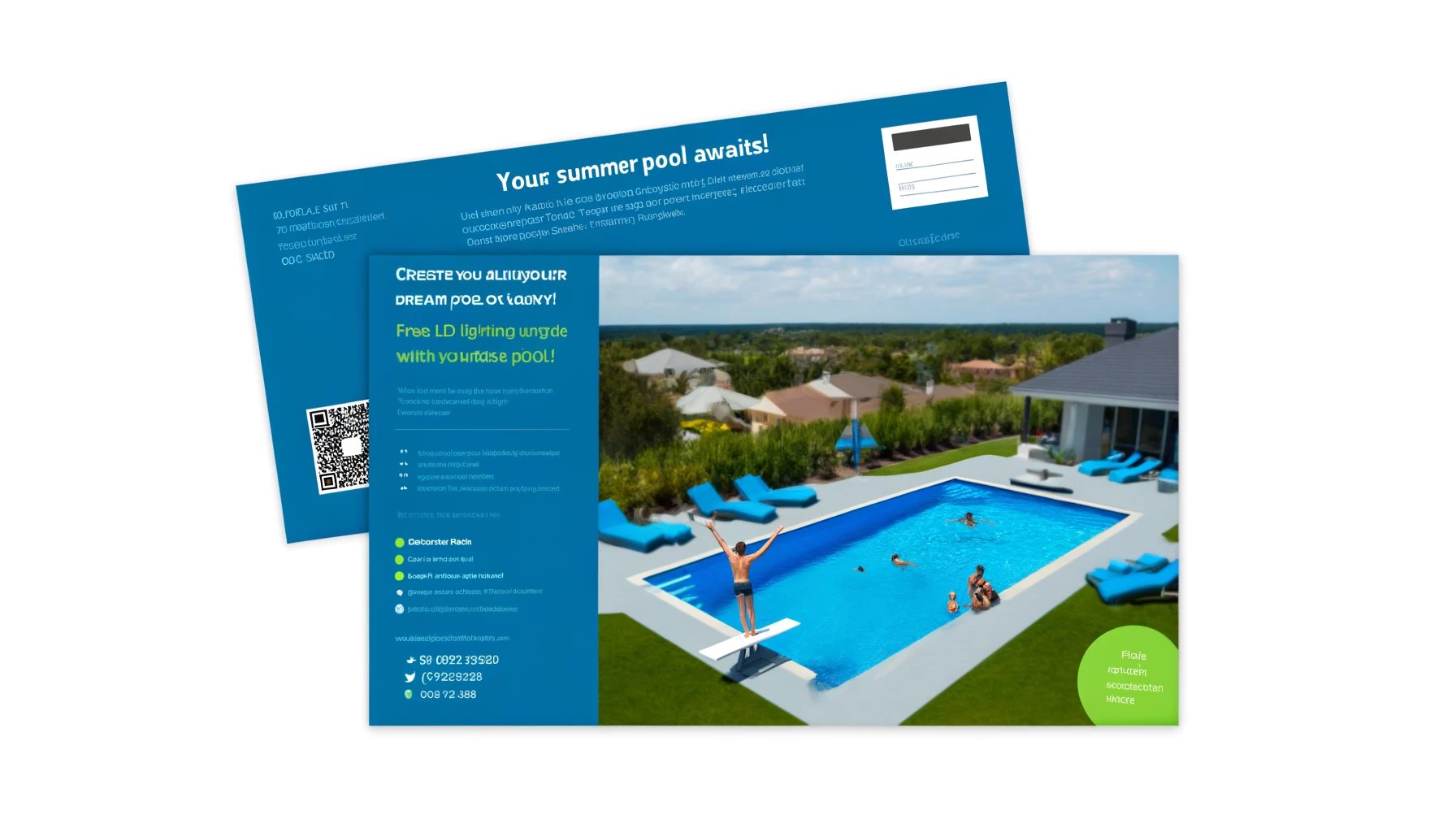
- Pool-Shaped Mailers. A mailer cut into the shape of a pool stands out in a stack of bills and flyers before anyone reads a word of it. Target neighborhoods with older homes and larger lots instead of mailing an entire zip code; die-cut mailers cost more per piece, so a tighter list matters more here than with a standard flyer.
- Pop-Up Pool Showcases. Set up a small-scale display pool at a community event, home and garden show, or high-traffic local spot. It's the closest thing to a showroom most pool companies get, and it's worth having a team member on-site the whole time to answer questions on the spot, not just a banner and a stack of brochures.
- Dive-In Movie Nights. Sponsor a dive-in movie night at a community pool, with your branding on the screen and materials in attendees' hands. Pair it with a specific, time-boxed offer, "book a consultation by the end of the month," instead of just brand exposure; the audience is a captive one for a couple of hours, which is worth more than a passive logo placement.
- Floating Billboards. During peak season, a billboard on a popular lake or beach reaches people already thinking about water, sun, and the backyard they wish they had. Check local permitting before committing; waterway advertising rules vary a lot by municipality and this is easy to get wrong.
- Pool Decking Samples in Home Improvement Stores. Partner with a local home improvement store to display your decking materials with a QR code linking to a project gallery. Rotate the display seasonally and keep the QR code destination current; a code linking to an outdated gallery undercuts the whole point.
- Pool Care Workshops. Host a free maintenance workshop at your showroom or a community center, covering the handful of things that actually save homeowners money, chemical balance, filter maintenance, seasonal opening and closing. It's a low-pressure way to meet prospects face-to-face and hand them a branded takeaway, and attendees who aren't ready to buy today are exactly the referral source you want in six months.
- Bus and Bench Advertising. Neighborhoods with high pool ownership rates are worth the ad spend on local buses and benches, especially with a strong photo and a real testimonial instead of generic copy. This works better as a long-term brand play than a short campaign; give it a few months before judging whether it's earning its spot in the budget.
How Do I Pick the Right KPIs to Track?
You pick KPIs based on what the ad is actually supposed to do, not a generic list of marketing metrics. A brand-awareness campaign should be judged on reach and video views; a lead-gen campaign should be judged on cost per lead and conversion rate, not clicks. Decide which one you're running before you launch, not after you're staring at a dashboard trying to make the numbers mean something.
Google Analytics covers your website side: which campaigns are actually driving traffic that converts, not just traffic. Platform-native tools, like Meta's Audience Insights, show you who's engaging versus who's just seeing the ad, which matters when a campaign has a high click-through rate but low conversions; that gap usually points to a landing page problem, not an ad problem.
Test variants against each other before you commit real budget to either one. Run two headlines, or two visuals, with the same audience and spend, and let the data pick the winner instead of your gut. Scaling spend behind an ad you haven't tested is a guess wearing a budget.
Benchmark against your own past campaigns, not just industry averages you find online. A pool company's numbers vary too much by region and season for a generic benchmark to mean much; your own best-performing campaign from last spring is a more useful yardstick than a stat from a company you've never heard of.
What Do I Do If My Ads Are Already Underperforming?
You work through it in order. Skipping ahead to "spend more" before fixing targeting just burns money faster.
- Fix the targeting. Separate your audience into distinct segments, residential homeowners look for reliability and results, commercial clients care more about compliance and scheduling, and make sure your targeting actually reflects that split instead of one generic audience for every ad.
- Tighten the message. Lead with a clear headline, one unique selling point, and a strong visual, not three competing offers crammed into the same ad.
- Fix the budget. Match spend to the size of the opportunity, and track cost-per-acquisition specifically, not just cost-per-click. A cheap click that never converts costs more than an expensive one that does.
- Simplify the conversion path. If an ad promises a free estimate and the click leads to a homepage instead of a booking form, that friction is where most underperforming ads actually lose the sale, not the ad itself.
- Layer in retargeting, once the above is fixed, using Meta's Custom Audiences or Google's remarketing lists to show ads specifically to people who already visited your site or watched a video but didn't convert. A homeowner comparing three pool companies rarely picks one on the first visit, and retargeting is what keeps you in front of them until they do.
FAQ
How much should a pool company spend on advertising?
Advertising is one piece of the 5% to 10% of revenue most pool companies budget for marketing overall, typically landing around 2% to 5% of revenue on its own once you split out SEO, local search, and content. Within that, digital can start small and scale with performance, while physical tactics like mailers or sponsorships tend to require a set commitment upfront regardless of results.
Which pool advertising idea has the best ROI?
There's no universal answer since it depends on your market and audience, but campaigns with a clear conversion path, a tour, a contest entry, a booked estimate, tend to outperform pure-awareness plays because they give you something concrete to measure.
How do I know if an ad is failing because of targeting or because of the message itself?
A low click-through rate usually points to the wrong audience or a weak headline. A high click-through rate with low conversions usually points to the landing page or offer, not the ad itself.
Do physical advertising tactics still work, or is it all digital now?
Physical still works, just not as a replacement for digital. A pool-shaped mailer or a bus ad builds the kind of local brand recognition that makes a homeowner more likely to click your digital ad later instead of a competitor's; the two reinforce each other instead of competing for the same budget line.
How long should I run an ad before judging whether it's working?
Give a digital ad enough spend to reach statistical relevance before judging it, usually a couple of weeks at a reasonable daily budget, not a couple of days. Physical tactics need much longer than that; most only show their real value over a full season, not a single run.
Ready to Advertise the Right Way?
At Rizen, we've run paid campaigns for home service businesses, including pool companies, since 2014, and we track cost-per-appointment by channel so you know which of these ideas is actually producing booked jobs, not just clicks. Explore our Paid Ads Management services, or book a free strategy call if you want a second opinion on what's already running.





No Comments Yet
Let us know what you think